
As a personal finance writer for WealthSure Lab, I've shared countless strategies for managing money, from aggressive debt payoff to optimizing investment portfolios. My own journey, which involved meticulously tracking every single dollar to pay off $50,000 in debt over three years, has instilled in me a near-obsessive dedication to financial clarity. But for years, there was one area of my financial life that remained stubbornly opaque, a recurring source of stress and missed opportunity: my charitable donations.
It was April 14th, 2021, and I was staring at a chaotic pile of crumpled receipts, email printouts, and random notes, dreading another tax season scramble. I had just finished celebrating my final debt payment a few months prior, a monumental achievement that felt like scaling Everest. Yet, here I was, feeling utterly defeated by a stack of papers representing my generosity. That day, I vowed things would change. This is my personal story of why I started tracking donations year-round, and how it transformed not just my tax prep, but my entire relationship with giving.
Key Takeaways from My Year-Round Donation Tracking Journey:
- Eliminates Tax Season Stress: Proactive, continuous tracking means no last-minute scrambling for receipts, saving hours of frustration.
- Maximizes Tax Deductions: Detailed records ensure you don't miss a single eligible contribution, potentially saving hundreds, if not thousands, on your tax bill.
- Fosters Intentional Giving: A clear, ongoing record helps you understand your philanthropic patterns, allowing for more strategic and impactful contributions aligned with your values.
- Provides a Comprehensive Impact Overview: Beyond taxes, it offers a tangible look at the collective difference your generosity makes throughout the year, fostering a deeper connection to your giving.
- Integrates Giving into Overall Financial Health: Just like budgeting or investing, tracking donations becomes a natural, disciplined part of your holistic financial management.
The "Aha!" Moment: From Tax Season Panic to Proactive Tracking
For someone who tracks every single dollar that enters and leaves my bank accounts, my approach to charitable giving was, frankly, embarrassing. Every April, the same ritual played out. I'd open my "Tax Docs" folder, which was less a folder and more a black hole, and immediately feel a wave of anxiety. I'd begin the archaeological dig:
- Sifting through stacks of mail for physical donation receipts.
- Searching my email inbox with keywords like "donation," "receipt," "thank you," hoping to unearth digital confirmations.
- Scouring my bank statements, highlighting every transaction to a known charity, then trying to remember if I had a corresponding receipt or if it was a small, under-$25 cash donation I'd forgotten to record.
In 2020, this haphazard method reached its breaking point. I remember specifically trying to find proof of a $150 cash donation I'd made to my local food bank during a holiday drive. I knew I'd received a small, handwritten receipt, but it was nowhere to be found. After two hours of tearing my office apart, I gave up. That $150, a perfectly legitimate deduction, was lost. My partner, Sarah, who has always been far more organized than me in this particular area, just shook her head. "You track every latte you buy, every penny of interest you earn, but not this? It's literally money you're giving away!" Her gentle jab, though frustrating at the time, was a stark reminder of my inconsistency.
The feeling wasn't just frustration; it was a deep sense of self-betrayal. I had just achieved financial liberation from debt, a feat built on rigorous discipline and meticulous tracking. To then fall short on something as simple as documenting my generosity felt like a glaring blind spot in my otherwise sharp financial vision. That lost $150 wasn't just a missed deduction; it was a symbol of an unorganized approach that was costing me time, stress, and potential tax savings. That was my "aha!" moment. I realized that if I could track $50,000 of debt down to the last cent, I could certainly bring that same rigor to my charitable giving.
Beyond the Deduction: Understanding My True Impact
Initially, my primary motivation for year-round tracking was purely practical: simplify tax season and maximize deductions. However, as I got into the rhythm of it, I discovered a far more profound benefit: understanding my true philanthropic impact. My spreadsheet wasn't just a ledger; it became a living document of my values and a tangible representation of the difference I was trying to make in the world.
My System for Seamless Year-Round Tracking
My system needed to be simple, accessible, and integrated into my existing financial tracking habits. After all, if it was too cumbersome, I knew I wouldn't stick with it. I tried a few dedicated donation tracking apps, but found them either too clunky, overly complex for my needs, or too focused solely on the tax aspect. For me, the manual entry into my trusted Google Sheet provided the necessary hands-on engagement and flexibility.
Here's how I set it up:
- Dedicated Google Sheet: I created a new tab in my main "WealthSure Lab Personal Finance Tracker" spreadsheet, labeling it "Charitable Contributions." This sheet has columns for: Date, Organization Name, Amount, Type of Donation (Cash, Check, Credit Card, Stock, In-Kind), Purpose (e.g., "General Fund," "Disaster Relief," "Microloan"), Confirmation Number/Receipt ID, and a checkbox for "Receipt Filed."
- Dedicated Email Folder: I created an email folder simply titled "2024 Donations." Every time I receive an email receipt, I immediately forward it there. This keeps my inbox clean and all digital proofs in one easily searchable location.
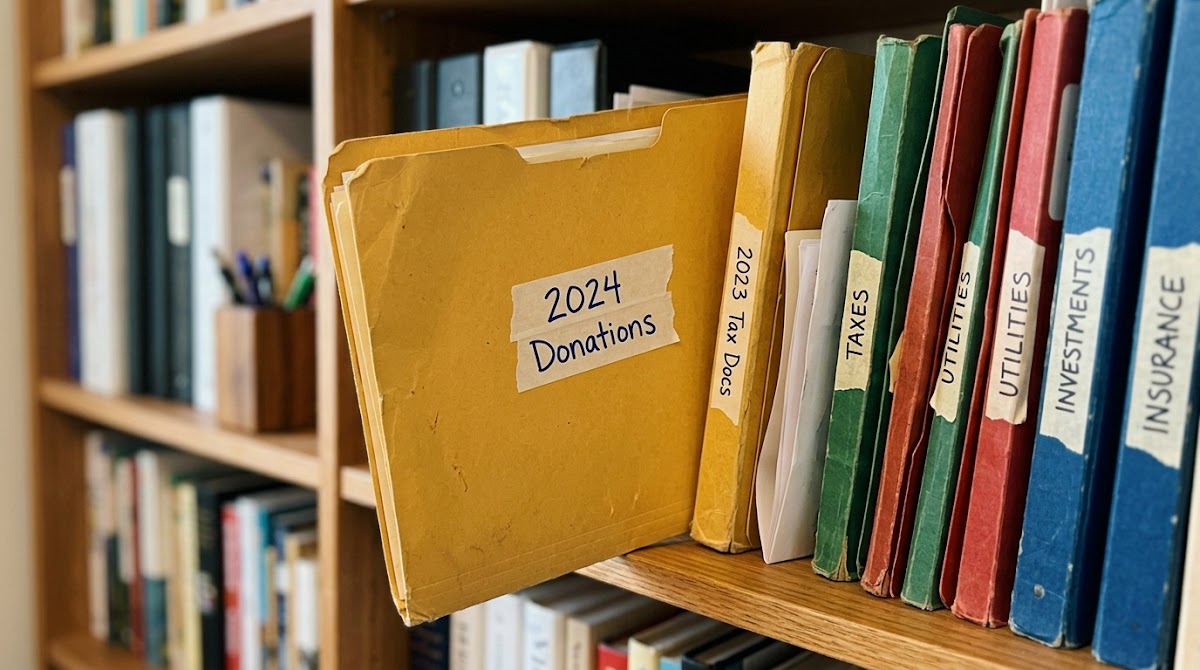
- Physical Folder: For the rare physical receipts (like the one I lost for the food bank), I have a clearly labeled manila folder in my home office filing cabinet: "2024 Charitable Receipts." As soon as I receive one, it goes directly in.
My routine is simple: roughly bi-weekly, or at least monthly, I dedicate 15-20 minutes to updating this sheet. I check my bank statements for any recurring donations, review my dedicated email folder, and glance at my physical folder. This consistent, low-effort approach prevents any backlog from building up.
Concrete Example 1: The Power of Microloans with Kiva
One of the first areas I applied this renewed focus was my microloan contributions through Kiva.org. I started funding Kiva loans years ago, but my tracking was inconsistent. With my new system, I could see my impact clearly. I remember the satisfaction I felt in Q3 2022 when my spreadsheet showed I'd funded 12 microloans totaling $300 to entrepreneurs in places like Peru, Kenya, and Vietnam. Seeing that number wasn't just about the money; it was the tangible representation of supporting small businesses and empowering individuals. It gave me a deep sense of purpose, far beyond the tax deduction (which, for Kiva loans, isn't always straightforward until the loan is defaulted, but that's a topic for another day). It showed me that my smaller, consistent contributions truly added up to significant support.
Concrete Example 2: Strategic Giving with Appreciated Stock
My disciplined tracking also opened my eyes to more advanced giving strategies. As my portfolio grew, I started researching ways to optimize my giving. I learned about Donor-Advised Funds (DAFs) and the benefits of donating appreciated stock. In November 2023, after consulting with my financial advisor, I decided to donate 10 shares of XYZ Corp, which I had purchased years ago for $500 but were now valued at $1,500, to Doctors Without Borders through my Fidelity Charitable Donor-Advised Fund. Recording this immediately felt like a truly "WealthSure Lab" move.
Here's why:
- By donating the stock directly, I avoided paying capital gains tax on the $1,000 appreciation ($1,500 current value - $500 cost basis).
- I received a tax deduction for the full fair market value of $1,500.
Seeing "Type: Stock" and "$1,500" in my spreadsheet, knowing the tax efficiency involved, gave me a surge of financial savviness and pride. It wasn't just giving; it was smart giving. This level of detail, meticulously captured in my ongoing records, transformed a potentially complex transaction into a clear, actionable part of my annual giving strategy.
Tax Season: From Dread to Done in Minutes
This is where the rubber truly meets the road. The most immediate and tangible benefit of my year-round donation tracking is the radical simplification of tax preparation. Gone are the days of frantic searching and the cold sweat of uncertainty.
In February 2024, when I started gathering my documents for the 2023 tax year, the contrast was stark. Instead of a messy pile, I had a single, beautifully organized Google Sheet and a corresponding email folder. I simply filtered my spreadsheet by date, copied the summary into a separate document, and had all the necessary information at my fingertips: organization names, dates, amounts, and types of donations. This summary, along with the digital receipts in my email folder, was all I needed.
When I uploaded my organized donation summary to TurboTax and later had a quick review with my tax preparer, Mr. Harrison, he actually chuckled. He said, "I wish all my clients came this prepared. This is a dream. You've saved yourself, and me, at least an hour of work." The feeling? Pure relief, followed by immense satisfaction. That hour of his time, which I would have paid for, was saved. More importantly, the mental burden of tax preparation had been lifted.
Concrete Example 3: Maximizing My 2023 Tax Deductions
For the 2023 tax year, thanks to my meticulous tracking, I confidently claimed $4,250 in itemized deductions for charitable contributions. This included my cash donations to local shelters, the stock donation to Doctors Without Borders, and several smaller online contributions to various causes I supported. Given my 24% marginal federal tax bracket, this translated to an estimated $1,020 reduction in my federal tax liability ($4,250 * 0.24 = $1,020). The feeling was incredible – not just from the savings, but from knowing I hadn't left a single dollar on the table. Every act of generosity I'd made throughout the year was properly accounted for and recognized. It reinforced the idea that discipline pays off, not just in debt repayment, but in every facet of financial management.

Cultivating Intentional Giving: A Deeper Connection
Beyond the practicalities of taxes and organization, year-round tracking has profoundly changed my approach to giving. My spreadsheet isn't just a record; it's a living document of my values and priorities. By reviewing it periodically, I can:
- Identify patterns: Am I consistently supporting the causes I truly care about? Or are my donations more reactive and sporadic?
- Budget for giving: Just as I budget for savings and investments, I now allocate a specific percentage of my income to charitable giving, integrating it into my overall financial plan. For 2024, I've set a goal to contribute 5% of my gross income to charity, and my tracking system helps me stay accountable.
- Discover new opportunities: Seeing where my money has gone helps me research other organizations doing similar work or identify areas where I might want to increase my support.
- Avoid "donation fatigue": By spreading my giving throughout the year, I can make more thoughtful decisions rather than feeling pressured by end-of-year appeals.
This deeper understanding has fostered a more intentional, proactive, and ultimately more fulfilling philanthropic journey. It's no longer an afterthought or a chore; it's an integral, cherished part of my financial identity.
FAQ: Your Questions About Year-Round Donation Tracking Answered
Q1: What if I only make a few donations a year? Is year-round tracking still necessary?
Absolutely. Even a few donations can add up, and having them properly documented eliminates any potential stress or forgotten details come tax season. It's about building a good habit, regardless of volume. The principle of organization remains the same, whether you have 3 receipts or 30.
Q2: What kind of records do I need to keep for tax purposes?
The IRS requires different levels of documentation depending on the amount and type of donation. For cash contributions, you need a bank record (canceled check, bank statement) or a written communication from the charity showing the organization's name, donation date, and amount. For donations over $250, you need a written acknowledgment from the charity (no matter the type of donation) that states the amount of cash, describes any non-cash property, and states whether the organization provided any goods or services in return for the contribution. My system ensures I have all these details readily available.
Q3: Does this apply to non-cash donations, like clothes or household items?
Yes, absolutely! Tracking non-cash donations is crucial. For items like clothes or furniture, you can deduct their fair market value. I always get a dated receipt from the charity (like Goodwill or Salvation Army) listing the items I donated. My spreadsheet has a specific column for "In-Kind" donations where I note the items and their estimated value. For single items valued over $5,000, you'll need a qualified appraisal, which is why detailed records become even more important.
Q4: What's a Donor-Advised Fund (DAF) and why do you use Fidelity Charitable?
A Donor-Advised Fund (DAF) is like a charitable savings account. You contribute cash, securities, or other assets to the DAF (e.g., Fidelity Charitable), receive an immediate tax deduction for that contribution, and then recommend grants from the fund to your favorite charities over time. I use Fidelity Charitable because they are one of the largest and most reputable providers, offering a wide range of investment options for the funds held in the DAF, and their platform is user-friendly for recommending grants. It's a fantastic tool for consolidating giving, especially when donating appreciated assets, and simplifying record-keeping.
Q5: How do I start tracking if I'm overwhelmed by past disorganization?
Start small and start now. Don't try to retroactively fix everything. For the current year, set up a simple system like mine (a Google Sheet, an email folder, a physical folder). As new donations come in, record them immediately. For past years, if you still have time before the tax deadline, do your best with what you have. But the most important step is to implement a forward-looking system that prevents future overwhelm.
Q6: Are there any free tools or apps you'd recommend for tracking?
While I prefer my custom Google Sheet, many people find success with free tools. Google Sheets or Microsoft Excel are excellent free options for creating your own customizable tracker. For those who prefer apps, some personal finance apps like Mint or Quicken might have basic categorization features, but they often don't provide the detailed charitable giving-specific fields I use. For dedicated charity tracking, I haven't found a free app that perfectly aligns with my needs for comprehensive detail, which is why my custom spreadsheet remains my go-to.
Q7: What's the biggest mistake people make with donation tracking?
The biggest mistake is procrastination and relying solely on memory or bank statements. Waiting until tax season to gather records almost always leads to forgotten donations, lost receipts, and unnecessary stress. Bank statements alone are often insufficient for IRS purposes, especially for donations over $250, which require a specific acknowledgment from the charity. Proactive, consistent record-keeping is the antidote to all these issues.