As a personal finance writer at WealthSure Lab, I live and breathe budgets, savings, and debt repayment. In fact, just three years ago, I was staring down the barrel of a staggering $50,000 in personal debt. Through rigorous tracking of every single dollar, strategic planning, and a whole lot of discipline, I clawed my way out. That journey taught me the immense power of financial planning, and it laid the groundwork for my next big goal: buying my first home.
I track every dollar of my portfolio, every penny saved, and every expense incurred. So, when it came to buying my first house, I approached it with the same meticulousness. I wanted to understand every step, every cost, every potential pitfall. And now, having emerged on the other side, keys in hand, I'm ready to give you my honest review of the first-time home buyer timeline.
This isn't a glossy, idealized walkthrough. This is the real talk, straight from my own experience, complete with the unexpected costs, the moments of sheer frustration, and the profound relief of finally achieving a dream. If you're considering taking the plunge, buckle up. My first home purchase journey was a rollercoaster, and I'm sharing every twist and turn.
Key Takeaways from My First Home Purchase Journey:
- Start Saving Early & Aggressively: I saved over $60,000 for my down payment and closing costs, which provided a crucial buffer.
- Credit Score is King: My 790 FICO score was instrumental in securing a competitive mortgage rate.
- Expect the Unexpected Costs: Budget at least 3-5% of the home price for closing costs, plus extra for immediate repairs and incidentals. My closing costs alone were $11,850.
- Find a Trustworthy Team: A great realtor and a responsive loan officer are invaluable. Don't settle.
- Be Prepared for Stress & Delays: The process is inherently stressful. Patience and persistence are key.
- Read *Everything*: From the purchase agreement to the loan disclosures, understand what you're signing.
- Don't Skip the Inspection: It saved me from a potential $7,000 roof repair right after closing.
My Journey Begins: Laying the Financial Foundation (Spring 2021 - Early 2022)
Before I even thought about looking at houses, I knew I needed to be in an iron-clad financial position. My debt payoff journey had instilled a deep respect for financial hygiene, and I wasn't about to compromise that for a house.
Aggressive Savings & Debt Freedom
My first step, even before targeting a home, was to achieve complete debt freedom. By Spring 2021, I had paid off my last student loan, bringing my total debt repayment to $50,000 over three intense years. This wasn't just about paying off balances; it was about building habits. I had already automated my savings, directing a significant portion of every paycheck into a high-yield savings account at Ally Bank. My goal was simple: accumulate enough for a substantial down payment and a comfortable emergency fund that could also cover closing costs and initial homeownership expenses.
By early 2022, I had accumulated over $60,000 in my dedicated "Home Fund." This wasn't just a number; it was a feeling of immense pride and security. Knowing I had a solid financial cushion was paramount. I specifically set aside 20% for a down payment (to avoid PMI if possible, though I ended up doing 10% for other reasons, which I'll explain later) and another 5-7% for closing costs and immediate post-purchase expenses. That extra buffer proved to be a lifesaver.
Credit Score Optimization
While paying off debt, I was also maniacally focused on my credit score. I knew a strong score would translate to better interest rates. I monitored my FICO score regularly through Experian and my credit card issuer. By the time I was ready to seriously consider buying, my FICO score stood at a healthy 790. This wasn't accidental; it was the result of years of on-time payments, low credit utilization, and a diverse credit history. When I eventually applied for a mortgage, this score was a non-negotiable asset.
Defining My Non-Negotiables and Nice-to-Haves
With my finances in order, I shifted to defining what I actually wanted in a home. This wasn't just a fun exercise; it was crucial for staying focused and avoiding emotional purchases. I created a spreadsheet (of course!) with columns for "Must-Haves" and "Nice-to-Haves."
- Must-Haves: 3 bedrooms, 2 bathrooms, a dedicated home office space (non-negotiable for my work), a safe neighborhood with good schools (even though I don't have kids yet, resale value is important), and a budget cap of $375,000.
- Nice-to-Haves: Fenced yard, updated kitchen, two-car garage, proximity to a specific park.
This list became my compass during the house hunt, helping me quickly filter out unsuitable properties and communicate clearly with my realtor.
Entering the Arena: Realtor, Pre-Approval, and the House Hunt (Spring 2022)
This is where the theoretical planning met the sometimes-brutal reality of the housing market.
Finding the Right Realtor: My First Critical Decision
I didn't just pick the first realtor who answered the phone. I interviewed three different agents, looking for someone who understood my budget, my specific needs, and the local market in Raleigh, NC. I settled on Sarah Jenkins from Summit Real Estate Group. What sealed the deal was her transparency and her willingness to push back. During our initial consultation, I remember her saying, "Look, this market is competitive. Your budget for a 3-bed, 2-bath with an office in a top-tier school district means we might be looking at slightly older homes or smaller yards. Are you prepared for that?" Her honesty was refreshing, and it set realistic expectations.
Navigating First-Time Home Buyer Mortgage Approval: The Pre-Approval Sprint
Sarah immediately connected me with a loan officer, Mark Evans, at Evergreen Mortgage, a local lender she trusted. This was a critical step in the first-time home buyer timeline. Getting pre-approved before seriously looking at homes is non-negotiable in a competitive market. It shows sellers you're a serious buyer, and it gives you a clear understanding of your budget.
The pre-approval process felt like a mini-audit of my financial life. I provided:
- Two years of tax returns
- Two months of bank statements (checking, savings, investment accounts)
- Two recent pay stubs
- Proof of employment
- A detailed list of assets and liabilities
Mark was efficient. Within 48 hours, I had my pre-approval letter for up to $375,000. He quoted me an initial interest rate of 5.875% for a 30-year fixed FHA loan, which was competitive at the time (Spring 2022). I opted for an FHA loan because it allowed for a lower down payment (3.5%) while still offering a good rate, which meant I could keep more of my cash reserves for closing costs and immediate home expenses. This was a strategic shift from my initial 20% down payment goal, giving me more liquidity – a lesson I learned from Mark's advice.
Mark also walked me through my Debt-to-Income (DTI) ratio, explaining that lenders typically look for a DTI below 43%. Mine was comfortably below that, thanks to my debt-free status and steady income, which significantly strengthened my application.
The House Hunt: A Test of Patience and Persistence
Armed with my pre-approval, Sarah and I hit the ground running. My honest review of this phase? It was exhilarating, exhausting, and at times, incredibly frustrating. We viewed over 20 homes in about six weeks. Many were "close but no cigar." I saw houses with amazing kitchens but tiny yards, or great locations but layouts that felt like a maze.
One particular house sticks out: a charming bungalow that ticked almost all my boxes. It was listed at $360,000. I loved the character, the natural light, and the surprisingly spacious backyard. I immediately told Sarah, "This is it! Let's put in an offer." She cautioned me, "It's a hot listing. We need to be aggressive." We put in an offer at $365,000, $5,000 over asking, with an escalation clause up to $370,000. I was so sure. But within hours, we learned we were outbid by an all-cash offer significantly higher. The disappointment was palpable. I remember feeling a wave of frustration, thinking, "Is this even possible?" Sarah just said, "It's tough, but we keep going. The right one is out there."
Making the Offer and Going Under Contract (Late Spring 2022)
After a few more near misses, we found "the one." It was a 1990s ranch-style home in a quiet cul-de-sac, listed at $350,000. It had the 3 beds, 2 baths, and a perfect bonus room for an office. The kitchen wasn't fully updated, but it was functional, and the backyard was private. It felt right.
Crafting the Winning Offer
This time, Sarah and I strategized. The house had been on the market for 10 days, which was unusual for the area, suggesting there might be less intense competition. We offered the asking price of $350,000, but with a few key concessions that made my offer attractive without overpaying:
- Strong Earnest Money: I offered $3,500 in earnest money (1% of the purchase price), showing I was serious. This money goes into escrow and is applied to your down payment or closing costs at closing.
- Quick Closing: I committed to a 30-day closing, which was appealing to the sellers.
- Minimal Contingencies: While I kept my inspection contingency (NEVER waive this!), I signaled flexibility on minor repairs.
To my immense relief, the sellers accepted! I remember Sarah calling me, "Congratulations, it's accepted! You're under contract!" I literally did a little happy dance in my kitchen. The feeling was a mix of elation and a sudden, sharp realization: "Okay, this is real. Now the hard part begins."
The Home Inspection: My Unsung Hero (and a Major Cost Saver)
Within days of going under contract, I scheduled a home inspection. I used an inspector recommended by Sarah, John Miller from Precision Home Inspectors. The inspection cost me $500 out of pocket, and it was the best money I spent during the entire process. John spent three hours meticulously going through the house, from the crawl space to the attic.
His report came back with a few red flags. The biggest one: the roof, while not actively leaking, was at the very end of its lifespan and would likely need replacement within 1-2 years. Estimated cost: $7,000. There were also minor issues like a leaky faucet and some worn-out electrical outlets. Armed with this detailed report, Sarah negotiated with the sellers. They agreed to give me a $5,000 credit at closing towards the roof replacement. This was a huge win and a perfect example of why you never skip the inspection. That $500 fee saved me thousands.
The Appraisal: A Moment of Truth
Next up was the appraisal, ordered by my lender, Evergreen Mortgage. The appraisal is a professional assessment of the home's value to ensure it's worth the amount you're borrowing. This cost me $600. I was nervous, especially after seeing the competitive market. What if it appraised low? That could throw a wrench in the whole deal.
When the report came back, the house appraised at $352,000, slightly *above* our purchase price of $350,000. This was a massive relief. It confirmed I wasn't overpaying and that the lender was comfortable with the collateral. The feeling was pure validation – a quiet affirmation that I had made a sound investment.
The Mortgage Gauntlet: Underwriting and Final Approval (June 2022)
This phase was, without a doubt, the most stressful and demanding part of my first-time home buyer timeline. It felt like Evergreen Mortgage wanted to see every financial document I had ever touched, and then some.
Documentation Demands: The Endless Paper Trail
After the initial pre-approval, I thought most of the heavy lifting was done. I was wrong. Underwriting is where lenders verify *everything*. I submitted bank statements, pay stubs, and tax returns multiple times. Then came the "conditions" list:
- "We need a letter of explanation for a $1,500 deposit in your checking account from three months ago." (It was a bonus from work, but I had to provide the pay stub again and a written explanation.)
- "Can you provide updated statements for your investment accounts?"
- "We need proof that your earnest money cleared your bank."
- "Please provide a letter from your employer verifying your current employment and salary."
This went on for weeks. Every time I thought I had provided everything, another request would pop up. I remember one Friday afternoon, Mark called me. "Hey, just one more thing. We need a signed letter from you stating that you intend to occupy the property as your primary residence and that you have no other outstanding real estate loans." I sighed, "Mark, I've already told you that three times. And it's an FHA loan, so of course it's my primary residence." He patiently replied, "I know, I know. But underwriting needs it in writing, signed and dated, specifically for this condition." It was tedious, frustrating, and felt like jumping through hoops just for the sake of it. My dry humor definitely came out during these calls.
The Struggle: The Waiting Game and Communication Gaps
My biggest struggle during this phase was the feeling of being in limbo and the occasional communication lag. There were days when I wouldn't hear anything, and my anxiety would build. I'd email Mark, and sometimes it would take a day for a response. I learned that persistence was key, but also that there's a limit to what the loan officer can do once it's "in underwriting."
Specific Mistake #1: Not asking for a clear timeline for each "condition" fulfillment. I would submit documents, then wait, not knowing if they were received or if more were coming. This led to unnecessary stress. I should have asked, "Once I submit this, what's the next step, and how long until you expect to hear back from underwriting?"
Specific Mistake #2: Over-analyzing every bank transaction. Because of the deposit verification requests, I became paranoid about any movement in my accounts. I even delayed transferring money between my own savings and checking accounts, fearing it would trigger another request. While vigilance is good, this level of paranoia was counterproductive and added to my stress. I should have trusted that legitimate transactions, even if questioned, would be easily explained.
Finally, after what felt like an eternity, Mark called me on a Tuesday morning. "Congratulations! Your loan is cleared to close. We have final approval!" The relief that washed over me was immense. It was like a giant weight had been lifted. All the stress, the paperwork, the waiting – it was all worth it.
Closing Day and Beyond: The Reality of Homeownership (July 15, 2022)
The finish line was in sight.
The Final Walkthrough
A day before closing, Sarah and I did a final walkthrough of the house. We checked that everything was in the agreed-upon condition, that no new damage had occurred, and that any negotiated repairs (like the $5,000 roof credit) were reflected. Everything looked good. The house was empty and clean, ready for me.
Closing Day: Signing My Life Away (Figuratively)
On July 15, 2022, I sat at a large conference table with Sarah, Mark, and a closing attorney from Liberty Title Company. In front of me was a stack of papers that felt three inches thick. This was it: the moment I would officially become a homeowner.
The attorney walked me through each document. I signed the promissory note, agreeing to repay the loan. I signed the deed of trust, giving the lender a lien on the property. And then, the HUD-1 settlement statement, detailing all the costs. My closing costs totaled $11,850. This included:
- Lender fees (origination, processing, underwriting): $2,500
- Appraisal fee: $600
- Title insurance (lender and owner's policy): $1,800
- Prepaid property taxes and homeowner's insurance (escrow setup): $4,000
- Recording fees: $250
- Attorney fees: $1,200
- Survey: $500
- The $5,000 seller credit was applied here, reducing my out-of-pocket cash needed at closing.
I had prepared for these costs, having set aside a significant portion of my $60,000 savings specifically for this. My down payment was $12,250 (3.5% of $350,000), plus the $11,850 in closing costs, minus the $5,000 seller credit. So, my total cash-to-close was $19,100. I had the funds wired from my Ally Bank savings account earlier that morning.
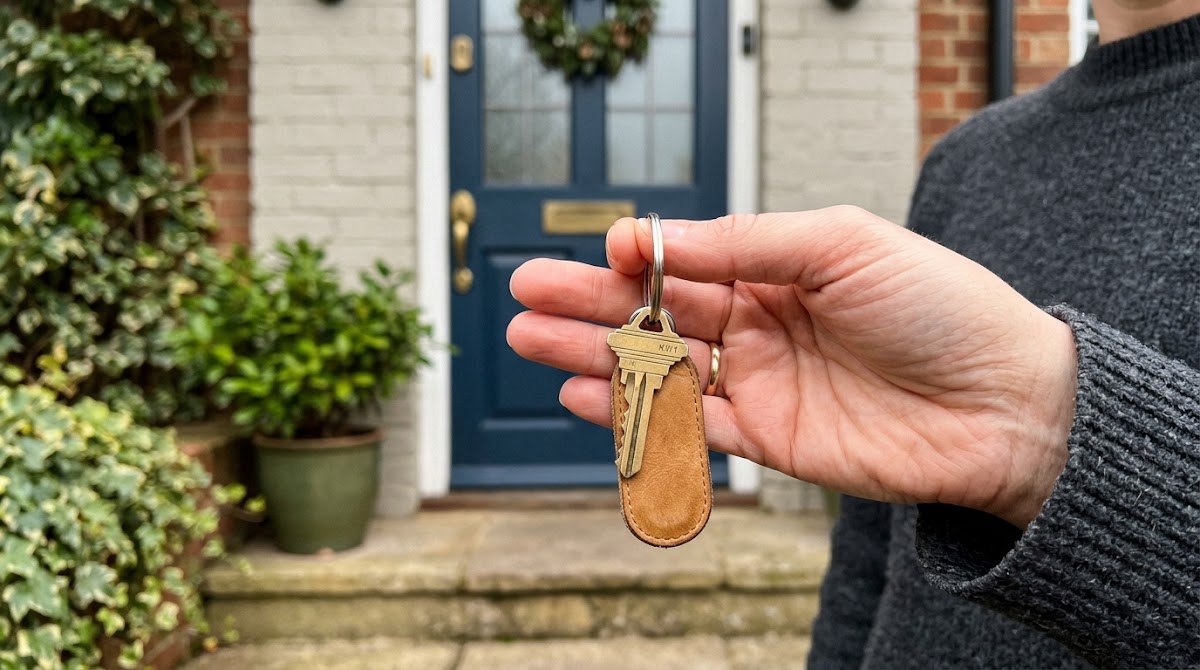
When I signed the last document, the attorney slid a set of keys across the table. "Congratulations," she said. "You're officially a homeowner." The feeling was surreal. It wasn't the explosive joy I might have imagined; it was a deep, quiet sense of accomplishment and a profound feeling of stability. After years of hard work, budgeting, and debt repayment, I had a place to call my own. It felt like a monumental milestone in my personal finance journey.
The Reality of Homeownership: The First Few Months
The journey doesn't end at closing. My honest review would be incomplete without mentioning the immediate post-closing reality. Within the first month, I had several unexpected expenses:
- New Washer/Dryer: The previous owners took theirs. Cost: $1,500.
- Utility Setup Fees: Small fees, but they add up. Total: $150.
- Lawn Mower & Basic Tools: Essential for maintaining the yard. Cost: $400.
- Paint & Minor Repairs: I wanted to personalize a few rooms. Cost: $800.
These weren't massive, but they reinforced the need for that emergency fund I had diligently built. Homeownership is a continuous financial commitment, but it's one I feel incredibly proud and prepared for.
Lessons Learned From My First Home Purchase Journey
Reflecting on my honest review of the first-time home buyer timeline, here are the core lessons I'd impart:
- Financial Discipline is Non-Negotiable: My debt-free status and robust savings were the bedrock of this entire process. Without them, I wouldn't have qualified for a competitive mortgage or weathered the unexpected costs. Start saving *now*, even if you're years away from buying.
- Your Team Matters More Than You Think: A great realtor (like Sarah) who advocates for you and a responsive loan officer (like Mark, despite the underwriting frustrations) make a world of difference. Don't be afraid to interview multiple professionals.
- Budget for More Than You Think You Need: Beyond the down payment, closing costs, and moving expenses, have a buffer for immediate repairs, upgrades, and unforeseen incidentals. I aimed for 5-7% of the purchase price for these extras, and I'm glad I did.
- Patience is a Virtue: The process is long, complex, and often frustrating. There will be delays, unexpected hurdles, and moments of doubt. Take deep breaths, trust your team, and remember your end goal.
- Ask All the Questions: No question is too silly. If you don't understand a document, a fee, or a process, ask until you do. This is one of the biggest financial decisions of your life.
My honest review of the first-time home buyer timeline is that it's a marathon, not a sprint. It's challenging, but incredibly rewarding. Walking through my own front door for the first time, knowing I had earned it through years of financial discipline, was a feeling I'll never forget. If I can do it, you can too.
FAQ: Your First-Time Home Buyer Questions Answered
Q1: Is first time home buying stressful? My honest review says yes, but how can I manage it?
A: Absolutely, yes, it is stressful. My honest review of the first-time home buyer process is that it's a significant emotional and financial undertaking. I found the most stressful parts were the waiting game during underwriting and the fear of being outbid in a competitive market. To manage it, I recommend:
- Over-communicate with your team: Ask your realtor and loan officer for proactive updates and clear timelines.
- Set realistic expectations: Understand that delays and unexpected issues are common.
- Practice self-care: Don't let the house hunt consume you. Take breaks, do activities you enjoy, and lean on your support system.
- Maintain your financial discipline: Knowing your finances are solid provides a huge sense of security.
Q2: What were the most unexpected costs first time home buyer experience?
A: Beyond the down payment, the biggest unexpected costs for me were the cumulative closing costs (my total was $11,850, even with a seller credit) and immediate post-closing expenses. I knew closing costs were a thing, but seeing the detailed breakdown of lender fees, title insurance, attorney fees, and prepaid taxes/insurance really added up. Also, don't forget the immediate needs like new appliances, basic tools, and any small repairs or cosmetic updates you want to do right away. My first month had an extra $2,850 in these "unexpected but necessary" expenses.
Q3: How important is my credit score for navigating first time home buyer mortgage approval?
A: Extremely important. My 790 FICO score was a major advantage. It directly impacts the interest rate you'll be offered, which can save you tens of thousands of dollars over the life of the loan. A higher score also signals to lenders that you're a responsible borrower, making the approval process smoother. Focus on paying bills on time, keeping credit utilization low, and avoiding new credit inquiries in the 6-12 months leading up to your home purchase.
Q4: Should I get pre-qualified or pre-approved?
A: Always go for pre-approval. Pre-qualification is a superficial estimate based on self-reported information, while pre-approval involves a deep dive into your finances by a lender. My pre-approval from Evergreen Mortgage was based on verified income, assets, and a credit check, making my offer much stronger to sellers. It also gave me a precise budget, preventing me from looking at homes I couldn't realistically afford.
Q5: How long does the typical first-time home buyer timeline take from start to finish?
A: From the moment I started seriously saving for a down payment (after debt payoff) to closing day, my journey took about 1.5 years. If you're starting from scratch with saving and credit building, it could be 2-5 years. Once you're financially ready and actively searching, the timeline from initial house hunt to closing can be as short as 2-3 months in a fast market, or 6+ months if you're struggling to find the right home or deal with market conditions. My timeline from finding a realtor to closing was about 4 months.
Q6: What's the biggest lesson learned from my first home purchase journey?
A: The biggest lesson learned is the absolute necessity of a robust emergency fund and financial literacy. Knowing my numbers – my savings, my credit score, my DTI – gave me confidence and leverage. It allowed me to absorb unexpected costs, negotiate effectively, and ultimately, close on my home without undue financial strain. The peace of mind that comes from being financially prepared is priceless in this process.
Q7: What about FHA vs. Conventional loans for first-time buyers?
A: I personally went with an FHA loan, which allowed for a lower down payment (3.5% for me, versus 5-20% for conventional). This was a strategic choice to keep more cash liquid for closing costs and immediate home expenses. The downside of FHA is mandatory mortgage insurance (MIP) for the life of the loan, which is a monthly cost. Conventional loans usually allow you to drop PMI once you reach 20% equity. Discuss with your loan officer which option best fits your financial situation, down payment amount, and credit profile.
Sources
- Consumer Financial Protection Bureau (CFPB) - www.consumerfinance.gov
- Fannie Mae - www.fanniemae.com
- U.S. Department of Housing and Urban Development (HUD) - www.hud.gov
- Experian - www.experian.com
- Ally Bank - www.ally.com