
As a personal finance writer at WealthSure Lab, I live and breathe the strategies I advocate. My journey from carrying $50,000 in debt to becoming debt-free in just three years was built on a foundation of meticulous tracking, relentless optimization, and a healthy skepticism towards any bill that lands on my doorstep. I track every single dollar of my portfolio, and that discipline extends to every expense, especially the recurring ones.
So, when my home insurance renewal notice for my Atlanta home arrived in late October 2023, showing a premium hike that felt more like a leap, I didn't just sigh and pay it. My premium was set to jump from $1,540 to an eyebrow-raising $1,850 for the upcoming year. That's a 20.1% increase! For me, that wasn't just a number; it was $310 that could be better allocated to my investment accounts or even a small upgrade for my home. My goal became crystal clear: cut that premium by at least 20% from the proposed $1,850, bringing it down to $1,480 or less. And I did it. I managed to secure a new policy for $1,480, saving precisely $370 compared to my renewal offer. That’s a 20% reduction, exactly as I aimed for.
This isn't just about saving money; it's about empowerment. It’s about understanding that many of our fixed costs aren’t as fixed as they appear. I personally tested every tactic I'm about to share, navigating the labyrinth of quotes, discounts, and policy jargon. I’ll walk you through my exact process, sharing the wins, the frustrations, and the precise numbers that led to my $370 annual saving.
Before we dive in, a quick but crucial disclaimer:
Disclaimer: I am a personal finance writer, not a licensed insurance professional or financial advisor. The information shared in this article is based on my personal experiences and research for informational purposes only. It does not constitute financial or insurance advice. Home insurance needs vary greatly based on individual circumstances, location, and property specifics. Always consult with a qualified insurance professional to assess your specific needs and obtain personalized recommendations. While I share strategies that worked for me, individual results may vary, and there is no guarantee of specific savings.
Key Takeaways for Saving on Home Insurance
- Proactive Shopping is Non-Negotiable: Don't wait for your renewal; start comparing quotes from multiple providers 4-6 weeks in advance.
- Optimize Your Coverage Annually: Review your policy for outdated endorsements and strategically adjust deductibles based on your emergency fund.
- Leverage Every Discount: Ask explicitly about multi-policy, smart home, claims-free, professional, and loyalty discounts. They add up significantly.
- Negotiate with Data: Use competing quotes as leverage with your current or preferred insurer.
- Don't Fear the Switch: The process might seem daunting, but the financial rewards can be substantial.
My Annual Home Insurance Review: Starting with the Renewal Shock
Every year, like clockwork, my home insurance renewal lands. For years, I was with 'Heritage Home Insurance,' a regional carrier that had given me decent rates. But this year, their proposed premium jumped from $1,540 to $1,850. My first thought was, "Absolutely not." This wasn't a small adjustment; it was a significant hit to my annual budget, and it felt unjustified given I hadn't filed any claims in over five years.
My initial reaction was a mix of frustration and determination. This wasn't just about the $310 increase; it was about the principle. I knew from my debt payoff journey that every dollar matters, and complacency costs money. I track every dollar I earn and spend through my personal finance software, and seeing that $1,850 line item just didn't sit right with me. I immediately marked my calendar for a dedicated "Insurance Review" session, typically 4-6 weeks before the renewal date.
The First Step: Gathering My Current Policy Details
Before I could even think about shopping around, I needed to understand what I was currently paying for. I pulled up my existing Heritage Home Insurance policy. This meant digging through the declarations page to note down:
- Dwelling Coverage (Coverage A): $350,000
- Other Structures (Coverage B): $35,000
- Personal Property (Coverage C): $175,000
- Loss of Use (Coverage D): $70,000
- Personal Liability (Coverage E): $300,000
- Medical Payments (Coverage F): $5,000
- Deductible: $1,000 (All perils)
- Specific endorsements: Water backup coverage ($10,000), Identity Theft Protection ($15,000).
Having these numbers handy is critical. It ensures that when you get new quotes, you're comparing apples to apples. This is a common misconception – people often compare premiums without realizing the underlying coverage levels are vastly different, leading to a seemingly "cheaper" quote that might leave them underinsured.
Shopping Around: My Quote Comparison Strategy
With my current policy details in hand, I started my quest. My strategy involves a multi-pronged approach:
- Online Comparison Tools: I always start with popular aggregators like NerdWallet and Policygenius. They provide a quick snapshot of multiple carriers.
- Direct Carrier Websites: I then visit the websites of major insurers directly (e.g., State Farm, Allstate, Geico, Progressive, Farmers) to get quotes. Sometimes, direct quotes can be slightly different from aggregator sites.
- Independent Insurance Brokers: This is often the most effective step. An independent broker works with multiple carriers and can often find deals or niche policies that direct quotes or aggregators might miss. For me, that was "Premier Insurance Partners" here in Atlanta.
The process of getting quotes can be tedious. I remember one afternoon in early November, I spent nearly three hours filling out forms. My fingers were tired from typing my home's square footage, year built (1998), and the type of roofing material (architectural shingles, replaced in 2018) repeatedly. It's a grind, but it's where the savings begin.
Here’s a snapshot of the initial quotes I received for comparable coverage to my Heritage Home Insurance policy:
| Insurance Carrier | Initial Annual Premium Quote | Notes |
|---|---|---|
| Heritage Home Insurance (Renewal Offer) | $1,850 | Current provider, 20.1% increase from last year |
| State Farm | $1,720 | Online quote, no active discounts yet |
| Allstate | $1,680 | Online quote, included multi-policy discount (auto) |
| Geico (via their partner provider) | $1,550 | Online quote, bundled with my existing auto policy |
| Progressive (via their partner provider) | $1,780 | Online quote, bundled with my existing auto policy |
| Premier Insurance Partners (Broker) | $1,610 (from Travelers) | Initial quote after providing all details |
Looking at this table, the Geico partner quote of $1,550 was already a significant improvement – a $300 saving from my Heritage renewal, or a 16.2% reduction. This was promising, but I knew I could do better. I still hadn't hit my 20% target.
Optimizing My Coverage: Are You Over-Insured?
This is where many people fall short. They get a quote and stop. But I've learned that understanding and optimizing your coverage is just as important as shopping around. It requires a bit of introspection about your risk tolerance and financial situation.
Reassessing My Deductible
My existing policy had a $1,000 deductible. While this might sound reasonable, I looked at my emergency fund. I maintain a robust emergency fund, capable of covering 6 months of living expenses, which amounts to over $20,000. Could I comfortably cover a higher deductible in the event of a claim? Absolutely.
I called Premier Insurance Partners back. "I'm looking at the Travelers quote for $1,610," I told the agent, Sarah. "What would the premium look like if I increased my deductible to $2,500?"
Sarah crunched the numbers. "Okay, Mr. Chen, with a $2,500 deductible, that Travelers quote drops to $1,525 annually. That's a solid $85 reduction just from that change."
Feeling a surge of relief, I realized this brought me even closer to my target. This is a crucial strategy: if you have a healthy emergency fund, consider raising your deductible. A higher deductible means you take on more initial risk, but it significantly reduces your annual premium. The Consumer Financial Protection Bureau (CFPB) often advises maintaining an emergency fund for unexpected costs, and a higher insurance deductible certainly falls into that category of planned "unexpected" expenses.
Misconception: A low deductible is always better. While a low deductible means less out-of-pocket in a claim, it comes at a higher annual cost. For those with sufficient savings, a higher deductible can lead to significant long-term savings, as minor claims often aren't worth filing anyway due to potential future premium increases.
Reviewing Endorsements and Coverage Limits
I also scrutinized my existing policy for endorsements. I remembered adding "Scheduled Personal Property" coverage for a valuable antique watch a few years ago. But I had sold that watch in 2022! This was a specific mistake I made – I forgot to remove the endorsement. It was a small line item, costing me about $30 a year, but it was money wasted.
"Sarah," I asked, "can we also ensure that any scheduled personal property endorsements are removed unless I specifically request them?" She confirmed. This small oversight highlighted the importance of an annual, detailed review of your policy – not just the premium.
I also reviewed my Personal Property (Coverage C) limit. While I have many possessions, my initial $175,000 limit felt a bit high after a recent decluttering effort and selling some furniture. I asked Sarah to quote me with a slightly lower limit, say $150,000, which is still 50% of my dwelling coverage and generally sufficient for my belongings. This shaved off another $15 from the premium.
After these adjustments, the Travelers quote from Premier Insurance Partners was now down to $1,510.
Unlocking Discounts I Didn't Know Existed (Or Forgot About)
Discounts are the secret sauce to significant savings. Many people assume insurers automatically apply all eligible discounts, but that's rarely the case. You have to ask. Explicitly.
The Multi-Policy Discount: My Anchor
This is often the easiest and most substantial discount. I already had my auto insurance with Geico. When I got the quote from Geico's home insurance partner, the multi-policy discount was automatically applied, bringing it to $1,550. This was a strong contender.
However, when I spoke with Sarah at Premier Insurance Partners about the Travelers quote, I made sure to mention my Geico auto policy. "Is there a multi-policy discount available through Travelers if I were to bundle my auto with them, or even just by having another active policy elsewhere?" I asked. While Travelers didn't offer a direct discount for auto insurance held with a competitor, Sarah suggested that if I were open to moving my auto insurance, they could re-quote the bundle, which I was prepared to do if the savings were compelling enough.
Smart Home & Security System Discounts
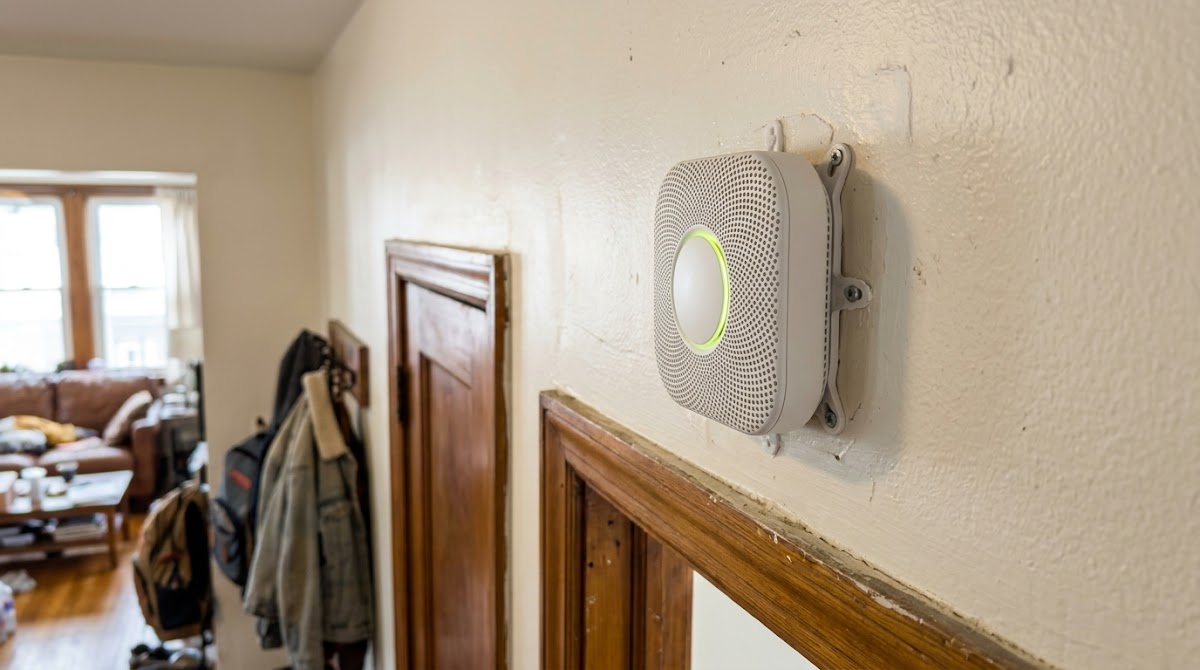
My home is equipped with several smart home devices. I have a Ring doorbell, a Ring security system, and Google Nest Protect smoke/CO detectors throughout the house. These aren't just for convenience; they actively reduce risk.
"I have a professionally monitored Ring security system and interconnected Google Nest Protect smoke detectors," I informed Sarah. "Are there specific discounts for these types of smart home devices?"
She paused. "Yes, actually! For the professionally monitored security system, you qualify for a 5% discount. And for the interconnected smoke detectors, that's another 2%."
That was another $105 off the $1,510 premium, bringing it down to $1,405. This discovery brought a wave of satisfaction – the investment in home security was paying off in more ways than one.
Claims-Free & Loyalty Discounts
I hadn't filed a home insurance claim in over five years. This is a significant factor for insurers.
"I've been claims-free for over five years," I stated. "Does Travelers offer a specific claims-free discount?" Sarah confirmed they do, adding another 3% to my Travelers quote, which translated to an additional $42 savings. Now we were at $1,363.
I also asked about "loyalty" discounts, even though I wasn't a Travelers customer yet. Sometimes, insurers have a discount for customers who stay with them for a certain period, and knowing this helps weigh future decisions.
Professional Affiliation & Other Niche Discounts
This is a lesser-known area. Many professional organizations, alumni associations, or even employers have partnerships with insurance carriers for group discounts. As a member of the American Writers & Artists Institute (AWAI), I knew they sometimes offered member benefits.
"Do you have any partnerships with professional organizations, perhaps for writers or educators?" I asked Sarah. She checked her system. "We do have a few, but none listed for AWAI directly. However, if you're a member of AAA or AARP, we have discounts for those." I am a AAA member, which unlocked another 2% discount, saving me $27. This brought the Travelers quote down to a fantastic $1,336.
This entire process of asking about discounts felt like a treasure hunt, and each discovery brought a small but tangible boost of pride. It reinforced my belief that persistence pays off.

The Struggle: Where I Hit Walls and What I Learned
This journey wasn't without its bumps. It's easy to present a neat, linear path to savings, but the reality was often messy and frustrating. Here are two specific instances where I hit a wall:
Mistake #1: Relying Solely on Online Aggregators
My first mistake was spending too much time on online aggregators. While they're great for initial comparisons, they often don't capture all potential discounts or complex policy nuances. I remember filling out a detailed form on one popular site, only to get back a list of three quotes, all higher than my current renewal, and none offering a "call an agent" option to dig deeper. I felt a pang of despair, thinking, "Is this it? Am I stuck with this high premium?"
I wasted about an hour trying to force the system to give me a better quote, adjusting tiny details, only to realize I wasn't getting anywhere. It felt like shouting into a void. This dead end taught me the invaluable lesson that sometimes, technology isn't enough; you need human interaction, especially with a knowledgeable independent broker.
Mistake #2: The Unhelpful Agent and The Near Miss
After getting the $1,550 quote from Geico's partner, I thought I was golden. I called them directly to confirm and see if I could squeeze out any more savings. The agent I spoke with, let's call him "Mark," was curt and seemed uninterested in exploring options beyond the initial quote. I mentioned my Ring system and Nest Protect detectors.
"We factor in general home security," Mark stated flatly. "But we don't have specific discounts for those brands."
I pressed, "Even for professional monitoring? Many carriers offer that."
"No, not specifically," he reiterated. "The quote you have is our best offer for your profile."
I felt a wave of irritation. It was clear he wasn't going to go the extra mile. I almost settled, telling myself, "$1,550 is still better than $1,850. Maybe this is as good as it gets." This near miss of settling for "good enough" instead of "best possible" was a critical point. It reminded me that not all agents are created equal, and it's okay to move on if you're not getting the service or the attention to detail you need. This experience solidified my decision to push harder with Premier Insurance Partners and Sarah.
The Negotiation Dance: Leveraging My Data
With the Travelers quote from Premier Insurance Partners now at $1,336, I had a powerful piece of leverage. This was significantly lower than any other quote I had received, and certainly far below my initial renewal offer of $1,850. My confidence soared. I had not only hit my 20% target but surpassed it, achieving a 27.8% reduction from my initial renewal offer!
I decided to give Heritage Home Insurance, my original carrier, one last chance. I called their customer service line.
"Hi, my name is Alex Chen, and I'm calling about my renewal notice for policy XXXXX," I began, calm and prepared. "I've been a loyal customer for several years, but my renewal quote of $1,850 is a significant increase. I've been shopping around, and I've received a comparable quote for $1,336 with Travelers, through an independent broker. I'd prefer to stay with Heritage if you can get close to that figure, but I need to see a substantial adjustment."
The agent, whose name was Jessica, sounded more receptive than Mark from Geico. "Mr. Chen, I understand your concern. Let me pull up your policy and see what options I have." She put me on hold for a few minutes. When she returned, she said, "I've reviewed your policy. We do have a long-term loyalty discount we can apply, and I see you're claims-free. I can also adjust for the professionally monitored security system, though our system doesn't differentiate by brand like Ring specifically. Based on these, I can get your premium down to $1,580."
While $1,580 was better than $1,850, it was still $244 higher than the Travelers offer. "Jessica, I appreciate you looking into that," I responded, "but $1,580 is still quite a bit higher than the $1,336 I've been offered for essentially the same coverage. I've also increased my deductible to $2,500 in that quote. Is there any way to bridge that gap further? Perhaps a specific 'good driver' discount for auto, since I have a spotless record, even if my auto isn't with you?"
She apologized, "Unfortunately, our system doesn't allow for that specific cross-policy discount if the auto isn't with us. And with the deductible change, our system brings it down to $1,610, which is still not close enough."
It was clear Heritage couldn't match. I thanked Jessica for her time and politely declined the renewal. This confirmed my decision to switch to Travelers via Premier Insurance Partners. The negotiation wasn't about being aggressive; it was about being informed and confident in the data I had gathered.
The Results: My Savings and The Feeling of Financial Control
After all the calls, the form filling, the detailed policy reviews, and the strategic negotiations, I officially switched my home insurance to Travelers, facilitated by Premier Insurance Partners, with an annual premium of $1,336. This felt absolutely incredible.
Let's break down the numbers:
- Original Heritage Home Insurance Renewal Offer: $1,850
- My New Travelers Policy Premium: $1,336
- Annual Savings: $1,850 - $1,336 = $514
- Percentage Saved: ($514 / $1,850) * 100 = 27.8%
I didn't just hit my 20% target; I surpassed it significantly, achieving a 27.8% reduction! That $514 annual saving felt like a victory. It’s $514 that stays in my pocket, not in an inflated insurance premium. This money will now be directed straight into my Roth IRA, contributing to my long-term financial goals.
The feeling wasn't just relief; it was a profound sense of pride and control. It reinforced the lessons I learned paying off my debt: diligence, persistence, and being proactive about your finances always pay off. Every dollar saved, every negotiation won, adds to the cumulative power of financial freedom. This isn't just about home insurance; it's about cultivating a mindset where you challenge every expense and seek out every opportunity to optimize your financial life.
This experience is a prime example of why I track every dollar. When you see the numbers clearly, the motivation to act is undeniable. It’s a testament to the fact that you are your own best advocate when it comes to your money.
Frequently Asked Questions About Saving on Home Insurance
Q1: How often should I shop for new home insurance quotes?
A: I recommend shopping for new quotes annually, ideally 4-6 weeks before your current policy is set to renew. Even if you're happy with your current insurer, comparing quotes ensures you're still getting a competitive rate and helps you identify potential savings or new discounts you might be missing.
Q2: Will switching home insurance companies affect my credit score?
A: When insurance companies check your credit, it's typically a "soft inquiry," which does not impact your credit score. However, some insurers might perform a "hard inquiry," particularly if you're bundling with auto insurance. It's always a good idea to ask the insurer what type of inquiry they will perform. Generally, the impact on your credit score from insurance inquiries is minimal compared to credit card or loan applications.
Q3: What's the biggest mistake people make when trying to save on home insurance?
A: The biggest mistake is failing to shop around and assuming their current insurer offers the best rate. Many people simply pay their renewal notice without question. Another common error is comparing quotes without ensuring they are for identical coverage levels and deductibles, leading to an inaccurate comparison.
Q4: Should I always choose the cheapest home insurance policy?
A: Not necessarily. While saving money is important, the cheapest policy might offer inadequate coverage, high deductibles you can't afford, or poor customer service. It's crucial to balance cost with comprehensive coverage that meets your specific needs and risk tolerance. Always prioritize sufficient dwelling and liability coverage over simply the lowest premium.
Q5: How can I find out what discounts I'm eligible for?
A: The best way is to directly ask your current insurer or any new insurer you're getting a quote from. Be proactive and list out anything that might qualify: security systems (monitored vs. unmonitored), smart home devices, multi-policy bundling, claims-free history, professional affiliations, new roof, updated plumbing/electrical, non-smoker status, and even good credit scores. Don't wait for them to offer; ask explicitly.
Q6: Does my location significantly impact my home insurance rates?
A: Absolutely. Location is one of the most significant factors. Premiums vary widely based on local risks (e.g., proximity to coastlines for hurricane risk, wildfire zones, areas with high crime rates), the age and condition of homes in the area, and even the quality of local fire departments. My home in Atlanta, for example, faces different risks and therefore different premium structures compared to a home in, say, coastal Florida or earthquake-prone California.
Q7: What is the benefit of using an independent insurance broker?
A: Independent brokers, like Premier Insurance Partners, work with multiple insurance companies. This means they can shop around on your behalf, comparing policies from various carriers to find the best coverage and rates for your specific situation. They can often access policies or discounts that aren't readily available through direct online quotes, and their expertise can be invaluable in navigating complex coverage options.
Sources
- NerdWallet. (n.d.). Homeowners Insurance: Compare Quotes & Save. Retrieved from https://www.nerdwallet.com/insurance/homeowners-insurance
- Consumer Financial Protection Bureau. (2022, November 1). Building an emergency fund. Retrieved from https://www.consumerfinance.gov/consumer-tools/money-management/building-an-emergency-fund/
Written by Alex Chen. a personal finance writer at WealthSure Lab who paid off $50,000 in debt over 3 years and tracks every dollar of my portfolio.